
Thailand's Social Security Obligations: Legal Guide 2026

Updated: 1 day ago
Navigating social security obligations in Thailand can be complex, especially for foreign founders and foreign-owned SMEs. Understanding the requirements and processes is essential to ensure compliance and avoid penalties. In this guide, we break down the key aspects of social security contributions in Thailand, providing clear, practical steps and explanations to help you manage your obligations confidently.
Understanding Social Security Obligations in Thailand
Social security in Thailand is governed by the Social Security Act, which mandates contributions from employers, employees, and self-employed individuals. The system provides benefits such as healthcare, unemployment, disability, and retirement pensions. For businesses operating in Thailand, especially those with foreign ownership, compliance with social security obligations is not optional but a legal requirement.
Employers must register their employees with the Social Security Office (SSO) within 30 days of hiring. This includes both Thai nationals and foreign employees working in Thailand. Failure to comply can result in fines and legal complications.
Key points to remember:
Registration with the SSO is mandatory for all employees.
Contributions are deducted monthly based on the employee’s salary.
Both employer and employee share the contribution cost.
Self-employed individuals can also voluntarily contribute.
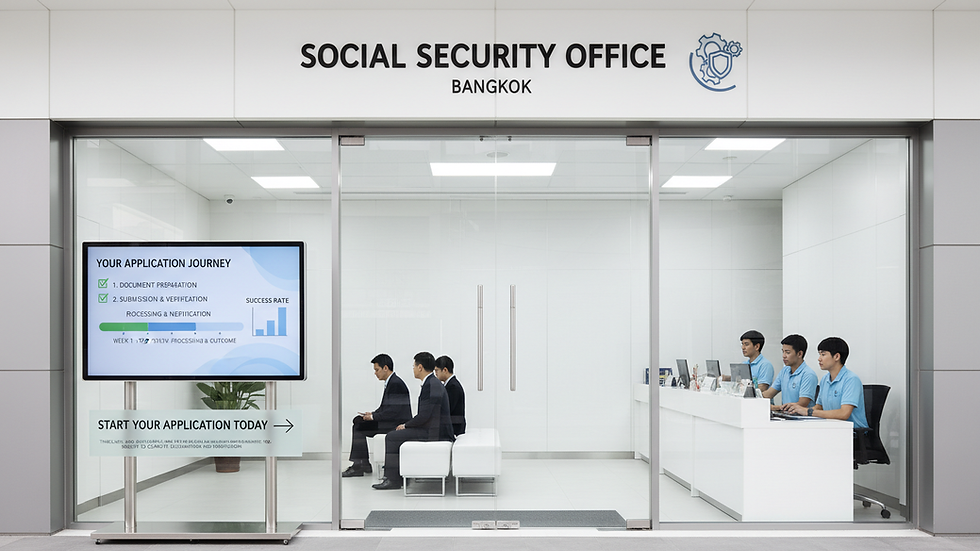
Social Security Obligations Thailand: What You Need to Know
When managing social security obligations in Thailand, it is crucial to understand your responsibilities as an employer or business owner. Here’s a structured overview:
Employer Responsibilities
Register your company and employees with the Social Security Office within 30 days of hiring.
Deduct employee contributions from their monthly salary.
Pay the employer’s share of contributions on time.
Submit monthly contribution reports and payments to the SSO.
Maintain accurate records of all contributions and employee details.
Employee Responsibilities
Provide accurate personal information to the employer.
Ensure contributions are being deducted and paid correctly.
Understand the benefits they are entitled to under the social security system.
What You Need to Prepare
Company registration documents.
Employee identification and work permit details (for foreigners).
Payroll records.
Bank account details for payment processing.
Being proactive in managing these obligations helps avoid risks such as fines or disruptions in employee benefits.

What is the Social Security Contribution Rate in Thailand?
The social security contribution rate in Thailand is set by law and applies uniformly to all registered employees. Contributions are calculated based on the employee’s monthly salary, up to a maximum salary ceiling.
Current Contribution Rates (subject to change by authorities)
Employer contribution: 5% of the employee’s monthly salary.
Employee contribution: 5% of their monthly salary.
Government contribution: 2.75% (paid by the government, not deducted from salary).
The maximum salary considered for contribution calculation is 15,000 THB per month. This means the maximum monthly contribution from both employer and employee is 750 THB each.
Example Calculation
If an employee earns 20,000 THB per month:
Contributions are calculated on 15,000 THB (salary ceiling).
Employer pays 750 THB (5% of 15,000).
Employee pays 750 THB (5% of 15,000).
Government contributes 412.50 THB (2.75% of 15,000).
Important Notes
Contributions must be paid monthly by the 15th of the following month.
Late payments may incur penalties.
Contribution rates and salary ceilings can be updated by the Social Security Office.
How to Register and Make Social Security Contributions
Registering and making contributions is a straightforward process if you follow these steps carefully:
Step 1: Company Registration with the Social Security Office
Submit company registration documents.
Provide a list of employees with their personal details.
Obtain a social security registration number for your company.
Step 2: Employee Registration
Register each employee within 30 days of employment.
Submit copies of identification and work permits for foreign employees.
Step 3: Monthly Contribution Submission
Calculate contributions based on employee salaries.
Deduct employee share from payroll.
Pay combined employer and employee contributions to the SSO.
Submit monthly contribution reports online or at the SSO office.
Step 4: Keep Records and Monitor Compliance
Maintain detailed records of payments and employee registrations.
Monitor updates from the Social Security Office for any changes in rates or procedures.
What You Need to Prepare for Registration and Payment
Company documents (e.g., company affidavit, tax ID).
Employee identification and work permits.
Payroll data.
Bank account for payment transactions.
Following these steps helps ensure your business remains compliant with Thailand’s social security laws.
Benefits of Complying with Social Security Contributions
Complying with social security obligations is not just a legal requirement; it also provides tangible benefits for your employees and your business:
Employee Benefits: Access to healthcare, maternity leave, disability benefits, unemployment support, and retirement pensions.
Business Benefits: Avoidance of fines and legal issues, improved employee satisfaction, and enhanced company reputation.
Government Support: The government’s contribution helps reduce the financial burden on employers and employees.
By understanding and fulfilling your social security obligations, you contribute to a stable and supportive work environment.
What to Do If You Face Challenges with Social Security Contributions
Sometimes, businesses encounter challenges such as delayed payments, disputes over contribution amounts, or registration issues. Here’s how to handle them:
Contact the Social Security Office: They provide guidance and support for resolving issues.
Keep Documentation: Maintain all correspondence and payment records.
Seek Professional Advice: If needed, consult with compliance experts who understand Thailand’s social security system.
Act Promptly: Address issues quickly to avoid penalties or disruptions in employee benefits.
Being proactive and transparent in managing these challenges helps maintain smooth operations.
Staying Updated on Social Security Regulations in Thailand
Social security laws and regulations can change. Staying informed is essential to remain compliant:
Regularly check official Social Security Office announcements.
Subscribe to updates from trusted legal and compliance sources.
Review your company’s social security processes annually.
Adjust payroll and contribution calculations as needed.
This approach minimizes risks and ensures your business adapts to regulatory changes efficiently.
We hope this guide clarifies your social security obligations in Thailand. For detailed assistance with company formation, founder visa/work-permit pathways, and ongoing corporate compliance, we are here to help you navigate these requirements with clear scope and transparent fees.
For more information on thailand social security contributions, please visit the official Social Security Office website.

